



Many veterans carry stress that lingers long after service ends. Memories, pressure, and loss can follow them home, shaping daily life in ways that feel hard to explain. A strong support hub helps veterans move toward stability, connection, and healing.
Who Is Considered a Veteran?

A veteran is anyone who has served in a branch of the United States Armed Forces, including:
- Army
- Marine Corps
- Navy
- Air Force
- Space Force
- Coast Guard
- National Guard
Some veterans deployed to combat zones. Others served in support roles at home or overseas. Long hours, strict routines, and exposure to danger or loss can leave lasting marks on mental health, and trauma-focused treatment often becomes an important part of healing.
These experiences don’t end with discharge papers, as they can alter sleep, mood, and how safe a person feels in daily life.
First Responders vs. Veterans
First responders are frontline workers who answer emergency calls and protect the public. They include police officers, firefighters, paramedics, EMTs, 911 and dispatch staff, and corrections officers.
- Veterans serve in military settings. They focus on national defense, with training cycles, drills, and deployments that may place them in harm’s way.
- First responders work mostly in local communities. They respond to fires, overdoses, crashes, and violence.
Even though their settings differ, both groups carry heavy mental strain and face higher risks for PTSD, depression, anxiety, and sleep problems. Research shows that about 1 in 7 first responders, or 14.3%, have probable PTSD linked to routine duties. Further studies report that 14–16% of deployed service members develop PTSD or depression, which is much higher than in the general public.
Taken together, these findings suggest that responders and veterans can be up to five times more likely to face serious behavioral health issues than many other adults.
The Hidden Mental Load on Military Veterans
For many veterans, the hardest struggles are the ones no one sees. They may feel on edge in crowds, scan for exits, or jump at sudden sounds. Nightmares and intrusive memories can disturb sleep and leave them exhausted.
Some live with grief for friends who died or guilt that they survived. Others feel troubled by events that clashed with their values. Over time, this strain can lead to PTSD, depression, substance use, or pulling away from loved ones.
Veteran Support for PTSD: Getting the Right Help
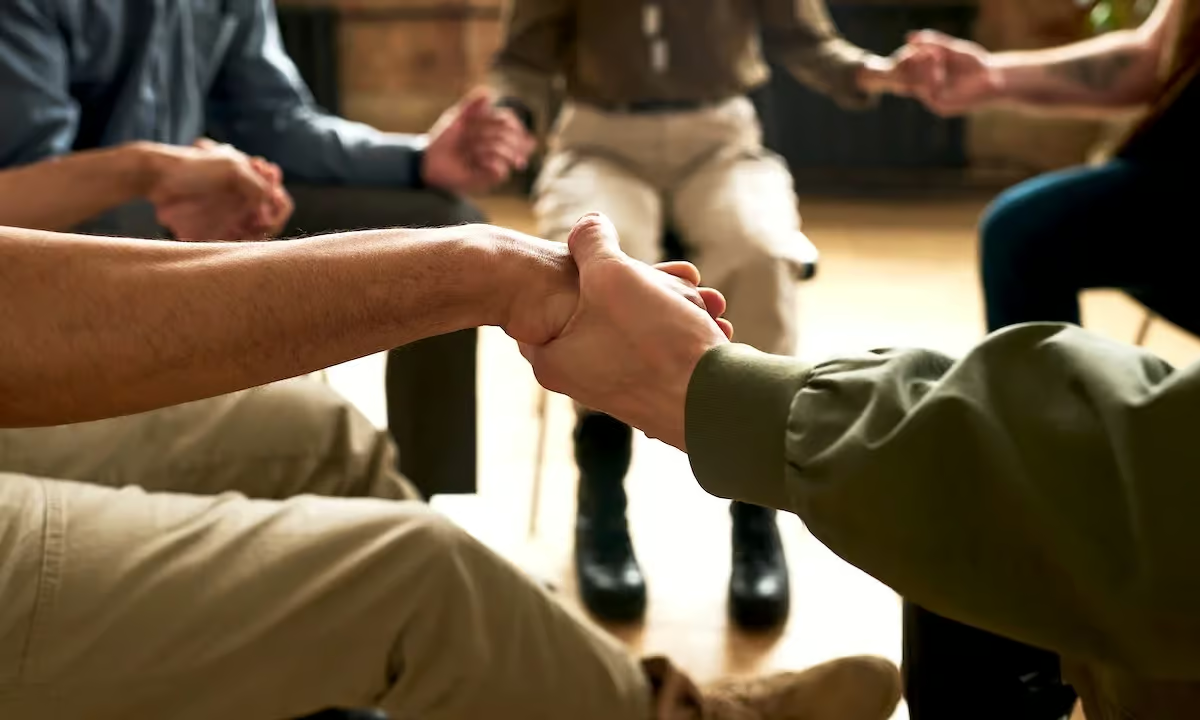
Support becomes vital when PTSD or trauma symptoms begin to affect work, school, or home life. Signs can include trouble sleeping, angry outbursts, panic, numbness, or using alcohol or drugs to cope. This level of risk is a clear sign that timely mental health treatment is not a luxury for this group but a necessary part of care.
Strong veteran support often includes:
- Trauma-informed therapy
- Structured treatment programs
- Peer or group-based therapy
- Follow-up aftercare
Some people use veteran benefits or local services. Others seek veteran programs that understand military culture and the impact of repeated stress and loss. Good care respects each person’s pace and allows time to build trust and practice new coping skills.
Supportive Services for Veteran Families
PTSD can affect the family members of those who served, leading to mood shifts, withdrawal, or irritability.
Supportive services for veteran families help loved ones learn about PTSD and trauma. Family therapy and communication skills training create space to talk about what is happening in a structured, guided way. When families learn to manage stress together, home becomes a steadier base for recovery, and veterans are more likely to stay in treatment.
Trauma-Informed Treatment for Veterans
Trauma-informed treatment focuses on safety, choice, and respect. For many veterans, it also means working with clinicians who understand military life and the stress of training, deployment, and coming home.
Different options can work together, such as:
- CBT to shift unhelpful thoughts and reduce fear and avoidance
- EMDR to help the brain process painful or stuck memories
- Expressive therapies that use writing, art, or movement to release tension
- Resilience coaching and sleep support to rebuild daily routines and energy
- Medication management to stabilize mood, anxiety, and sleep when needed
These services are often offered through day treatment, half-day treatment, and virtual treatment, so veterans can heal with stable care while working or caring for their families.
Community and Peer Groups for Veterans
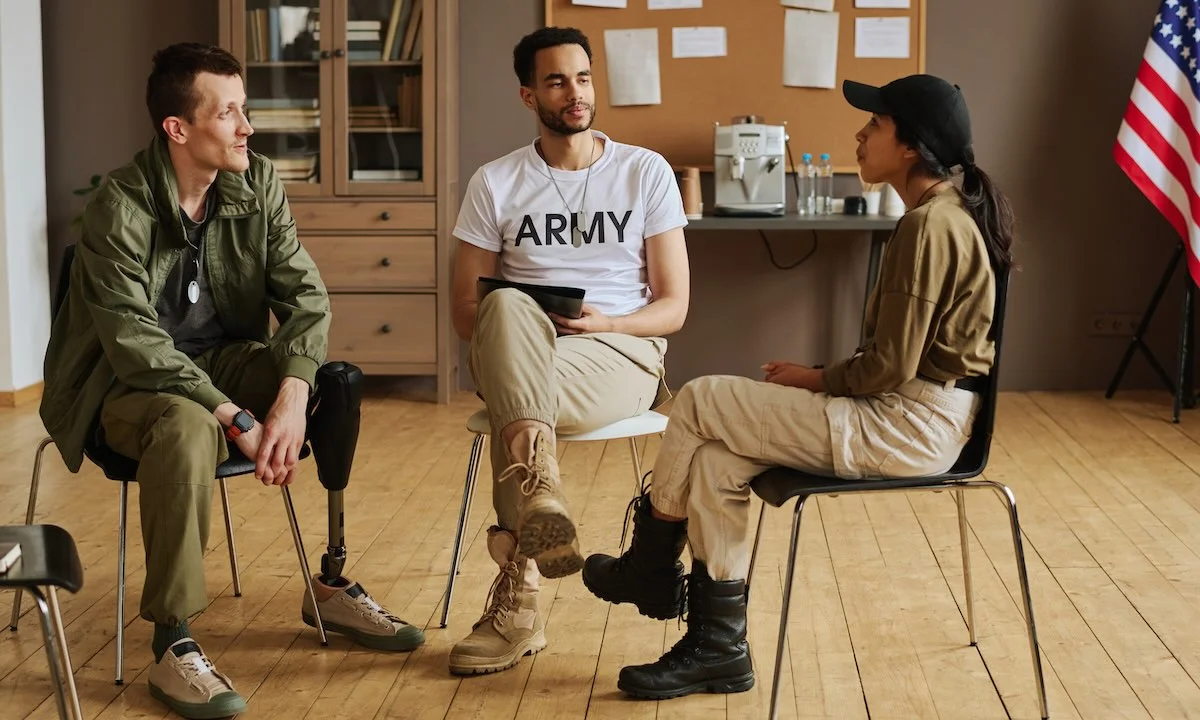
Working through trauma is easier when you don’t have to do it alone. Community and peer groups bring veterans together in a space where they do not have to explain the basics of service life.
In group therapy and peer support, veterans share stories, practice coping skills, and learn from others who have faced similar struggles. Shared understanding in group settings reduces shame and isolation and can restore a sense of belonging.
Begin Your Healing With Dedicated Veteran Support
When PTSD, anxiety, depression, or substance use begin to shape your days, reaching out is a sign of courage, not weakness. Strong veteran services offer specialized therapy, family involvement, and flexible treatment options that meet you where you are. Early care can prevent symptoms from deepening and help you rebuild stability, connection, and hope.
Our team provides trauma-informed programs for military veterans and first responders, including day treatment, half-day treatment, and virtual treatment. To explore support or verify insurance, contact Rebuilding Mental Health in MA at 781-806-3008.